Some lives are remembered publicly through long obituaries, professional accomplishments, awards, and family histories.
Other lives are held primarily in the memories of the people who shared them.
Those lives matter just as much.
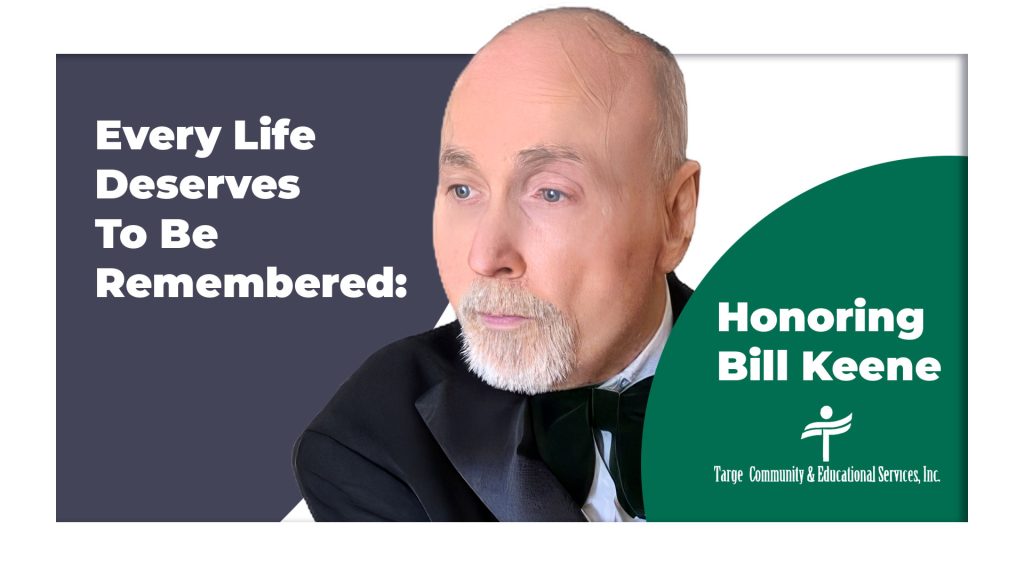
William “Bill” Keene III was a longtime member of the Target Community family. When he died unexpectedly at age 66, he left behind friends, family members, staff, housemates, and an organization profoundly shaped by his presence.
Bill’s story deserves to be remembered beyond the people who had the privilege of knowing him personally.
Not simply because he received support from Target Community.
Because he was Bill.
A Life That Began in an Institution
Bill was born with autism during a time when people with intellectual and developmental disabilities were frequently separated from their families and communities.
Before coming to Target, Bill lived at the Rosewood Center, Maryland’s former state institution for people with disabilities.
Institutions were often presented as places of treatment and care. In practice, they could remove people from ordinary community life and provide little control over where they lived, how they spent their time, or who supported them.
It is difficult to know everything Bill experienced there.
What we do know is that his sister, Lou Ann, visited him every day. She made sure he was cared for, had clean clothes, and knew the love of another person.
Those visits represented something institutions could never manufacture through schedules or policies.
Human connection.
As Dr. Matthew Ramsey reflected in the eulogy he delivered at Bill’s celebration of life, Lou Ann demonstrated “the lengths one will go to preserve human dignity.”
Becoming Part of a Community
Bill came to Target Community in the mid-1980s, when community-based services were still a relatively new alternative to institutional care.
Over the decades that followed, Bill lived in several Target homes and developed lasting relationships with housemates and staff.
His life was no longer contained within an institution.
He had a home.
He had people who knew his routines, understood how he communicated, recognized what made him anxious, and learned what brought him joy.
That distinction matters.
Community-based support is not simply institutional care moved into a smaller building. At its best, it allows someone to be known as an individual and provides the support that person needs to build a life around their preferences, relationships, and goals.
For Bill, that process took time.
In earlier years, public settings and crowded events could cause significant stress. He sometimes isolated himself and avoided social interaction.
With patience, consistency, and individualized support, that changed.
Bill began spending more time in the shared areas of his home. He attended events, took vacations, enjoyed community outings, and built a life that included far more than the walls around him.
As Dr. Ramsey explained:
“Bill had the opportunity to become the man he was born to be with the appropriate level of support.”
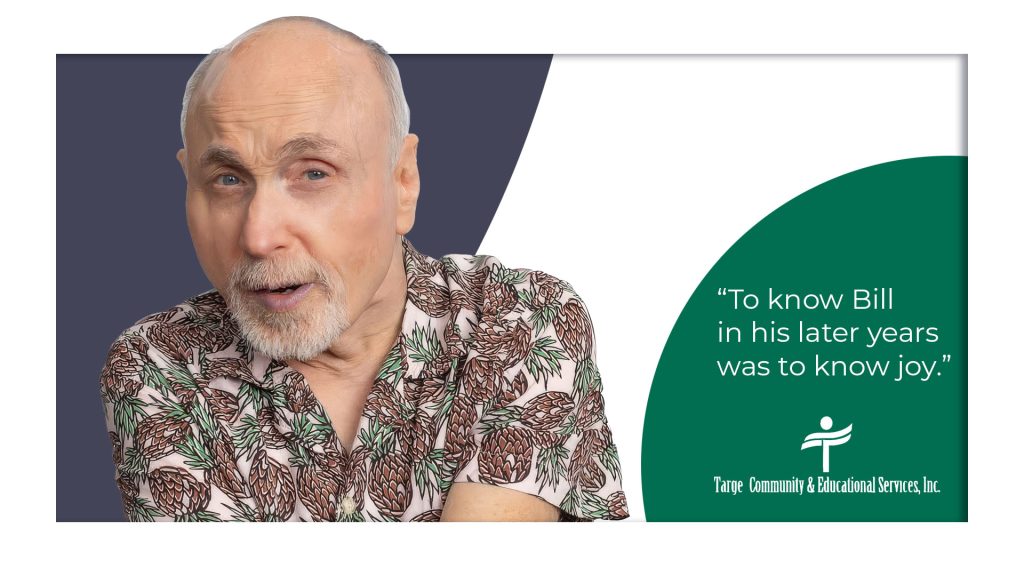
To Know Bill Was to Know Joy
Bill communicated in a way that was entirely his own.
His language often included familiar quotations, song lyrics, names, and phrases that carried meaning for the people who knew him best.
His personality needed no translation.
Bill was funny.
He was expressive.
He had strong opinions about household chores—particularly the apparently outrageous expectation that dishes must be put away every night.
He also loved music.
ABBA, Michael Jackson, and Janet Jackson were among his favorites. In the final year of his life, Bill attended a Janet Jackson concert.
Staff had wondered whether the crowd and noise might be overwhelming.
Bill had a wonderful time.
That evening represented more than attending a concert. It reflected years of growth and the work of people who continued creating opportunities for Bill instead of allowing earlier difficulties to define the rest of his life.
Bill also loved the Twilight films. He could often be found in his recliner, surrounded by television and music in his favorite corner between the living room and dining room.
These details may appear ordinary.
That is precisely why they matter.
A full life is built through ordinary preferences, familiar routines, ridiculous jokes, favorite songs, comfortable chairs, shared meals, and people who understand what makes us ourselves.
Support Made Growth Possible
Bill’s story should not be twisted into the tired claim that disability can be overcome through enough effort.
Bill remained a person with autism.
What changed was the environment around him and the support available to him.
Staff members took the time to understand him. They helped him navigate difficult situations, respected his routines, and continued introducing opportunities to participate in community life.
That support did not erase who Bill was.
It gave more of who he was room to emerge.
He moved from frequently isolating himself to spending time near the center of activity in his home.
He moved from struggling in public environments to attending concerts, vacations, celebrations, and Target Community’s gala.
At that gala, Bill received recognition for 40 years with Target.
Those changes did not happen because someone demanded that Bill become more like everyone else. They happened because people learned what he needed and remained committed to helping him experience more of life.
His Final Birthday
The day before his death, Bill celebrated his 66th birthday surrounded by friends.
There was no isolation.
There was no anxiety separating him from the people around him.
There was simply a birthday party and time spent with people he loved.
His death the following day was sudden. No one had time to prepare. But after surviving cancer, complications from COVID-19, and other medical challenges, Bill did not spend his final days enduring another prolonged hospitalization.
One moment he was present.
The next, he was gone.
His final full day had been a celebration of his life.
As Dr. Ramsey wrote:
“It seems, in the end, Bill was granted a heavy dose of human dignity.”
Grief Belongs in the Community Too
When someone receiving disability services dies, the grief extends far beyond a formal list of relatives.
Housemates lose a friend.
Staff members lose someone they may have supported and loved for decades.
Other participants lose a familiar presence.
An entire community feels the absence.
These relationships are real, even when society does not always have language or traditions that fully acknowledge them.
Creating space to remember Bill is part of honoring those relationships.
It also challenges a troubling reality: people with disabilities have not always been remembered with the same care and public recognition afforded to others.
A person’s life should not disappear because they did not have a traditional career, spouse, children, or achievements that fit neatly into an obituary.
The value of a life is also found in the joy someone created, the relationships they formed, the growth they experienced, and the ways their presence changed other people.
By those measures, Bill’s life was abundant.
Bill’s Life Continues to Connect People
After the death of Bill’s housemate Tommy, Dr. Ramsey visited their home.
Bill appeared to sense the grief surrounding him. He approached Dr. Ramsey, leaned against him, and repeated a phrase about listening to the Grateful Dead.
The moment stayed with Dr. Ramsey.
He later shared it with Lou Ann while preparing for Bill’s funeral. She suggested that everyone listen to the Grateful Dead in Bill’s honor.
On the drive to the graveside service, Dr. Ramsey did exactly that.
The music helped shape his final reflections on Bill:
“Bill’s life was a strange and different tune, but no less valuable.”
Bill is still creating connections.
His life connected his sister with the people who supported him.
It connected staff members and housemates across four decades.
It connected people through music, humor, grief, and shared memories.
Now, through the On Target Podcast, his story can reach people who never had the opportunity to meet him.
May His Memory Be a Blessing
Target Community supports adults with disabilities in living full, productive lives.
Bill’s life shows what that mission looks like across decades.
It looks like moving from an institution into a home.
It looks like being understood instead of merely managed.
It looks like attending a favorite artist’s concert after crowds once caused distress.
It looks like celebrating a birthday surrounded by friends.
It looks like having people who grieve when you are gone and continue telling your stories.
Bill Keene mattered.
His laughter mattered.
His music mattered.
His relationships mattered.
His life deserves to be remembered.
So long, Bill. We will see you a little farther down the road.
Dr. Ramsey recommends listening to “A Simple Twist of Fate,” covered by the Jerry Garcia Band on their self-titled 1991 album, as a companion to this post.
Listen to the full tribute to Bill Keene on the On Target Podcast below.